Expander
The Expander is a companion box for the M-Vave FM-1
It installs and switches firmwares without a computer, stores your songs, and connects the FM-1 to the rest of your studio over MIDI and analog clock
AVAILABLE FOR PRE-ORDER IN-STORE →
Features
Firmware manager
- Install and switch FM-1 firmwares (SLOOP, X0X, Felucca and more) from the box, with no computer and no web installer
- Shows which firmware your FM-1 is running
- Back to the official M-Vave firmware whenever you want
- Catalog of community firmwares kept up to date by us
Song library
- Load saved songs into the FM-1 and switch between them
- Back up the song you just made, straight from the box
- Songs, presets and firmwares live on a microSD card
- (coming) Web app to rename and organise songs and presets
MIDI
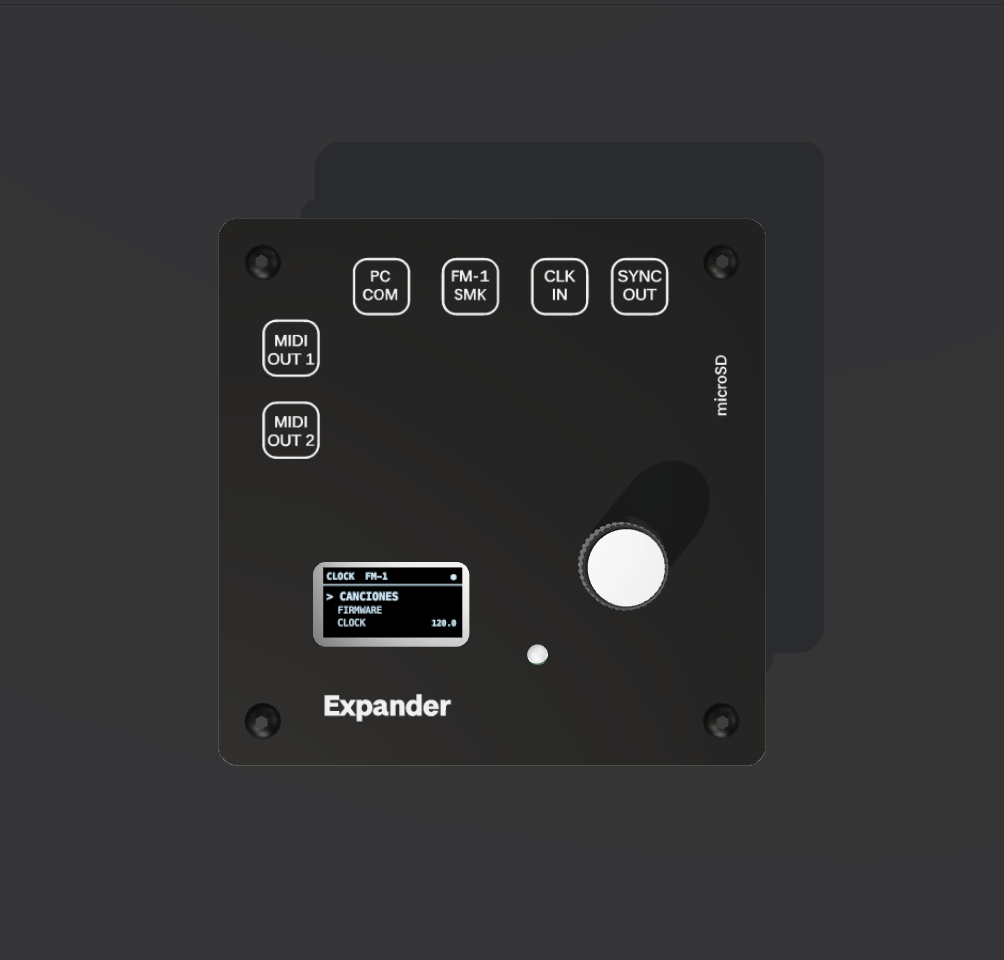
- 3 MIDI outputs on 3.5 mm TRS, each switchable between Type A and Type B in the menu
- 1 MIDI input on 3.5 mm TRS (opto-isolated): plug a keyboard or sequencer into the FM-1
- Everything the FM-1 plays goes out over MIDI: sequence other synths with it
- MIDI channel filter: choose which channels go out (channel remap and transpose coming)
Clock and sync
- Clock in (3.5 mm): any analog clock drives the FM-1, with 1, 2, 4 or 24 PPQN
- Sync out (3.5 mm) with ready profiles: Pocket Operator, Volca, Eurorack 1/16 and 1/4, 24 PPQN
- Three clock sources: FM-1, clock in or the internal clock with its own tempo
- Tight tempo follower: smooths the FM-1’s clock jitter and follows tempo changes in about 0.2 s
- Tempo LED
- CTRL in jack for a footswitch or CV
Hardware
- ESP32-S3 with 16 MB flash
- USB-C that works both ways: host for the FM-1, or device to your computer
- Powers the FM-1 over USB
- 0.96″ OLED and a push encoder, with selectable display styles
- Open source: schematics, PCB and firmware
Prototype
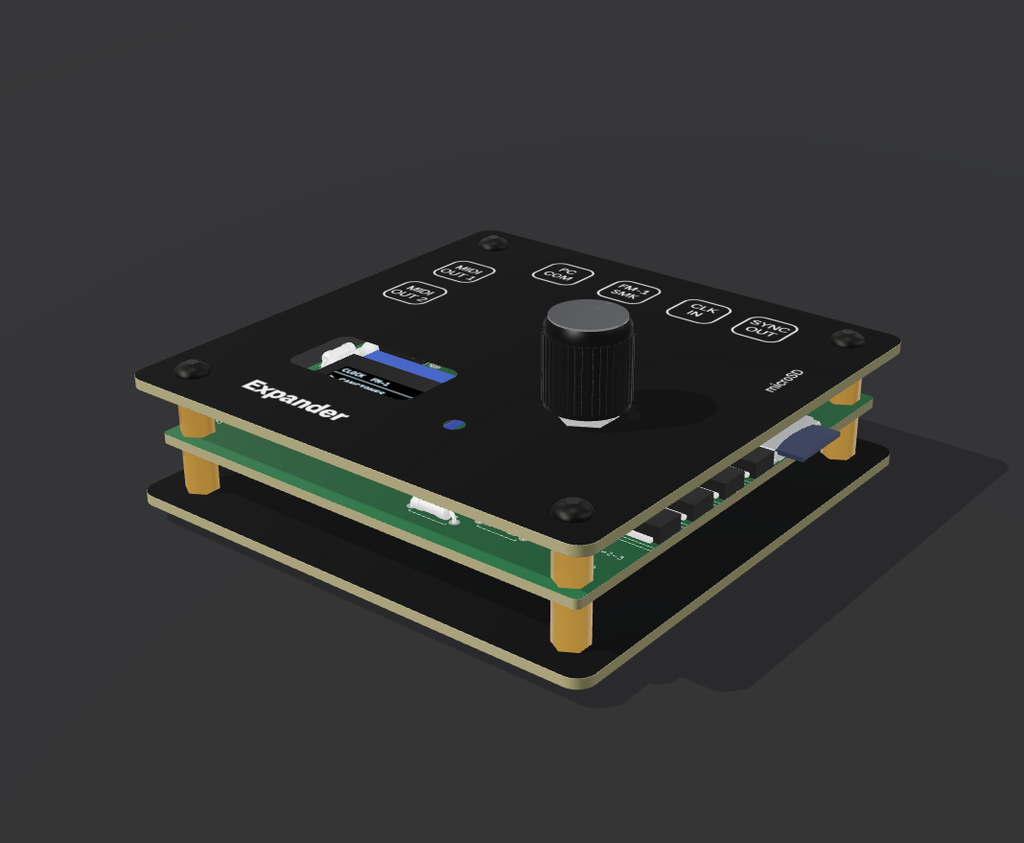
What you see on the video is a working prototype, user interface included.
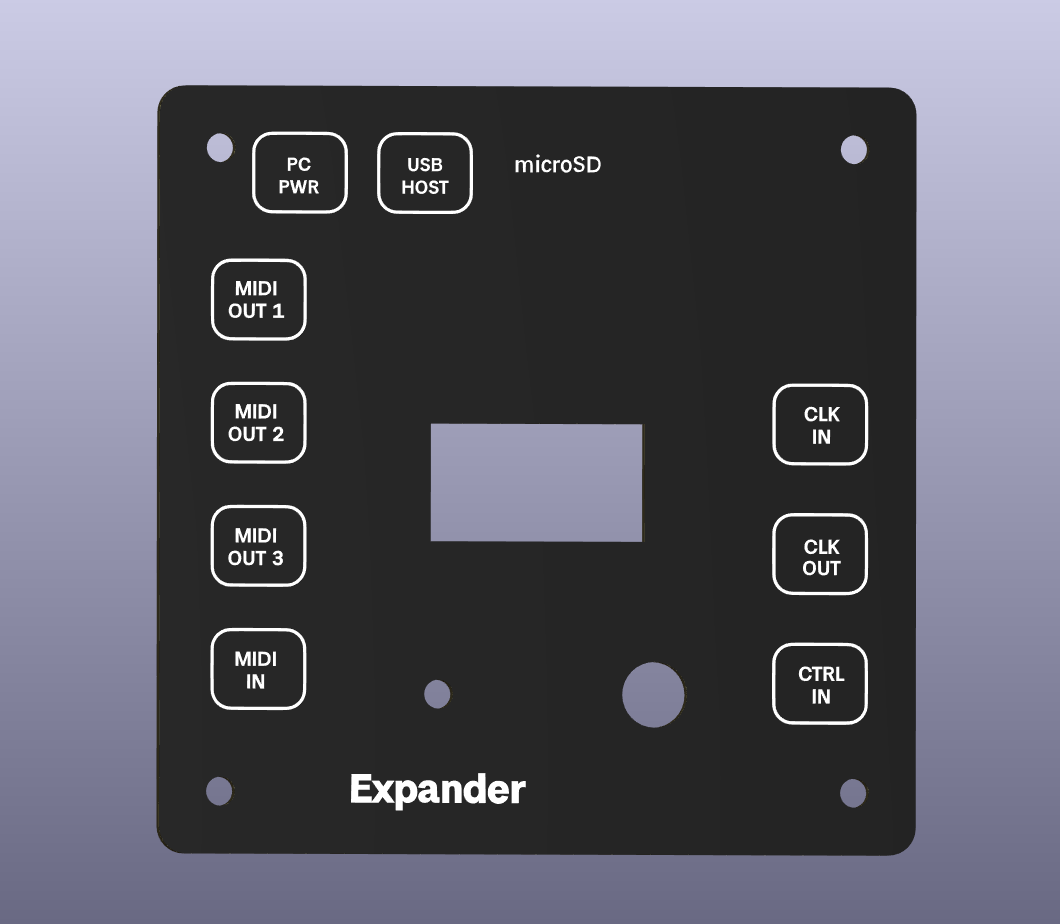
We’re currently designing the a new front panel, enclosure and UI.
Prototype
Prototype
Open hardware: What else can you do with the same board?
A list of ideas for the future—things that could be implemented in this very same box with a little time and imagination.
The board is, essentially, an ESP32-S3 with USB host, 4 MIDI ports (1 in, 3 out), clock in/out, CTRL IN, microSD, a display, and an encoder. That’s good for much more than just the FM-1—without changing the hardware; you just need to update the firmware.
MIDI tools
- USB-to-DIN MIDI host: plug any class-compliant USB keyboard or controller and play hardware synths, no computer needed
- MIDI router and splitter: 1 in to 3 outs, with per-output channel filters and Type A/B per jack
- MIDI merger: combine the TRS input and a USB controller into one stream
- Arpeggiator, chord generator and scale quantizer between a keyboard and a synth
- MIDI CC mapper: turn the encoder, the CTRL IN pedal or a CV into any CC
- MIDI monitor on the OLED, for debugging a rig
- SysEx librarian: store and send patch banks (DX7 .syx and others) from the microSD
Clock and sync
- Master clock for a whole setup: MIDI clock on 3 outs plus analog sync, with tap tempo
- Clock converter and divider: MIDI clock to analog pulses and back, with swing
- Sync two or more FM-1s, or a FM-1 with Pocket Operators, Volcas and Eurorack
- Metronome and count-in on the sync jack
- Wi-Fi clock (Ableton Link style), using the ESP32-S3 radio
Sequencing and playback
- Standalone step sequencer or Euclidean sequencer driving 3 MIDI outs
- MIDI file player from the microSD: backing tracks for live sets
- Looper and MIDI recorder: record what you play and loop it
Wireless
- Bluetooth MIDI bridge: USB or TRS gear to phones and tablets
- Wi-Fi web page to upload and download files on the microSD from your phone
Other devices
- Firmware loader and librarian for other USB-MIDI devices (the same idea already works with the SMK-37)
- Base for your own MIDI box: everything is open, so fork it
